
Paris Couture
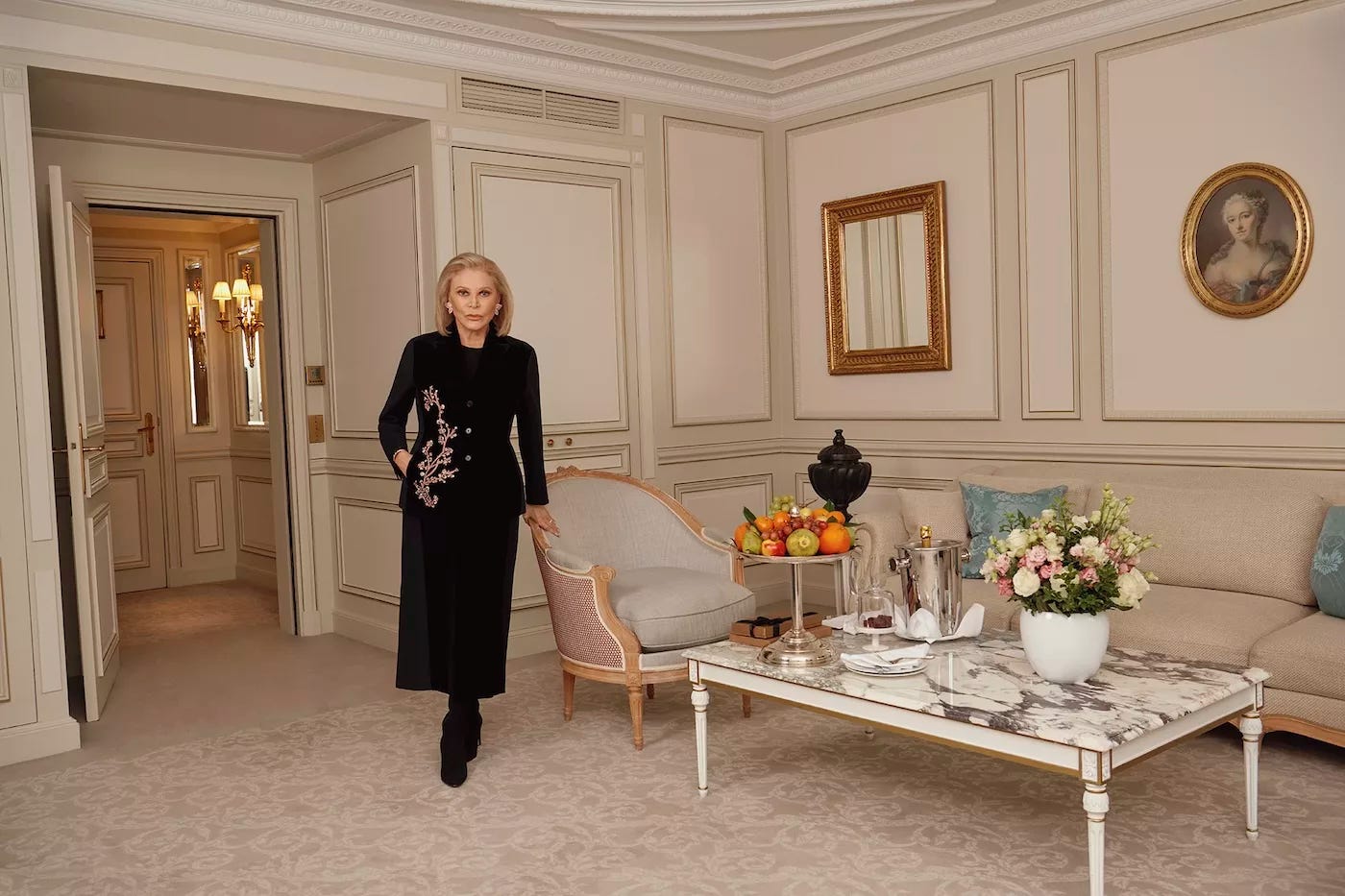
Palm Beach couture client Audrey Gruss attended the Paris shows in January to do a bit of shopping. She let me tag along.

By Dana Thomas for Palmer magazine.
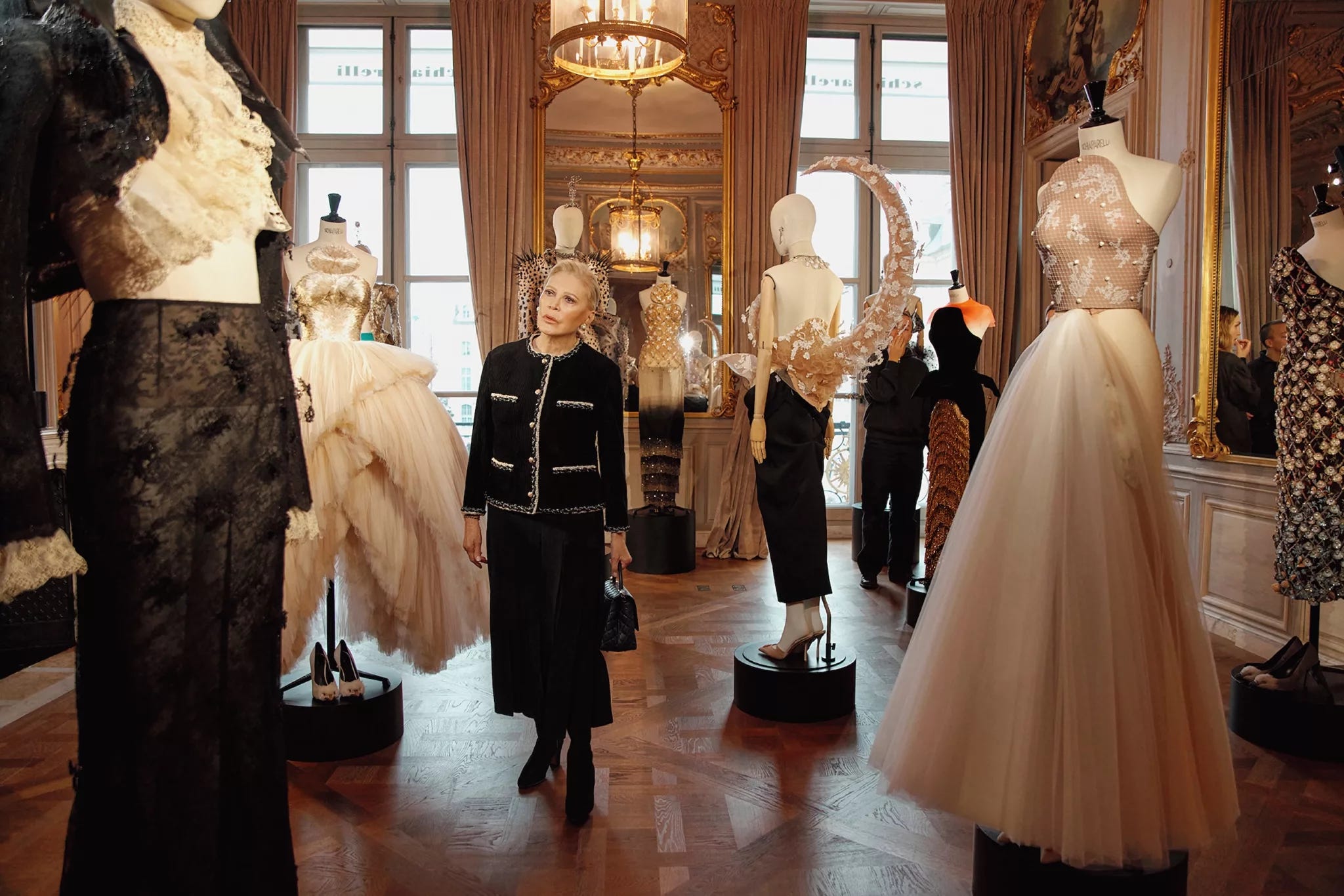
In the rarefied world of high fashion, the ultimate luxury is couture, the made-to-measure clothes that are presented each January and July in Paris to a select clientele. One such client is Palm Beach resident Audrey Gruss, the chair of the Hope for Depression Research Foundation (HDRF), a non-profit that supports research for the diagnosis, treatment, and prevention of depression, and the wife of Wall Street power broker Martin Gruss.
In January, the Grusses traveled to Paris for Haute Couture Week to shop for new looks for Audrey to wear to their many social and public engagements this year, including the HDRF Luncheon Seminar at The Plaza hotel in November. And what a whirlwind it was: couture shows, fashionable lunches, gala dinners, showroom visits, fittings, and, most importantly, fun. A lot of fun.
Couture is in the midst of a boom, with thousands of new clients of all ages and from all corners of the world paying $100,000 or more for fashion made just for them. Pascal Morand, executive president of French fashion’s governing body, the Fédération de la Haute Couture et de la Mode, explains why: the surge of high-net-worth individuals; the need for sensory experiences in our digital age; the desire for uniqueness in an increasingly homogenized world; and “the re-discovery of slowness” in our hustle culture. Haute couture is the essence of slow fashion: only two collections per year; hours of hand craftsmanship; several alterations to get the fit just right; and a lasting quality. “All this beautiful work is still happening in this world today because people need that,” Audrey concurs. “It can’t only be about commerce. You need inspiration and beauty in life, and couture is part of it.”
Clients are not couture’s only raison d’être, however. It also exists today to make noise, and does so in two ways: with big shows attended by A-list celebrities and house ambassadors, and by dressing stars for splashy public events like premieres and awards shows. Images from both give brands a mega publicity boost—what the fashion analytics firm Launchmetrics calls Media Impact Value (MIV)—in turn seducing aspirational middle market consumers to buy big-profit items like logo-stamped sunglasses and perfumes. Dior, for example, dressed actresses Jessie Buckley, Mia Goth, and Priyanka Chopra for the Golden Globes in January, which generated $11.9 million in MIV for the house, Launchmetrics reports.
Thus why, for the Spring 2026 season, Dior creative director Jonathan Anderson designed two haute couture collections: one for the runway with statement pieces for the red carpet, to provide “a high-end exclusive halo to the brand,” says Bernstein luxury analyst Luca Solca; and a second for the showroom, with more wearable looks for clients. That way, Dior got hype and sales.
Haute couture was invented in the 19th century by Paris-based British designer Charles Frederick Worth: rather than designing clothes to order, which had been the practice for centuries, Worth produced seasonal collections, presented them in fashion shows, then made clients’ selections to measure. And so it went, until the mid-1960s, when Yves Saint Laurent introduced his mass-manufactured ready-to-wear line, Rive Gauche. As luxury ready-to-wear swiftly took hold, the number of couture clients dropped from an estimated 20,000 to a couple of thousand. Cristóbal Balenciaga was so distraught, he abruptly shuttered his house.
By the 1990s, couture’s clientele had dwindled to a few hundred—propped up by a group of wealthy Americans, including Nan Kempner, Deeda Blair, Susan Gutfreund, Jayne Wrightsman, and Audrey Gruss. “My first couture purchase was a beautiful black suit with the gold buttons from Chanel by Karl Lagerfeld,” Audrey says. Over the years, she also bought Dior by Gianfranco Ferré and John Galliano, Valentino, Givenchy, Yves Saint Laurent, and Christian Lacroix. “I had one of Lacroix’s original pouf-skirt dresses, in turquoise, a beautiful color,” she says. It now resides at The Metropolitan Museum of Art’s Costume Institute.
Audrey traveled to Paris roughly once a year to view the collections, until she founded HDRF in 2006, in honor of her mother, Hope, who suffered from clinical depression. “Starting a non-profit corporation from scratch is a full- time job,” she says. Last year, she was invited to the New York presentation of Armani Privé, the Italian brand’s couture line. “And the bug bit me again,” she says with a laugh. She made plans to attend the Spring 2026 shows in January.
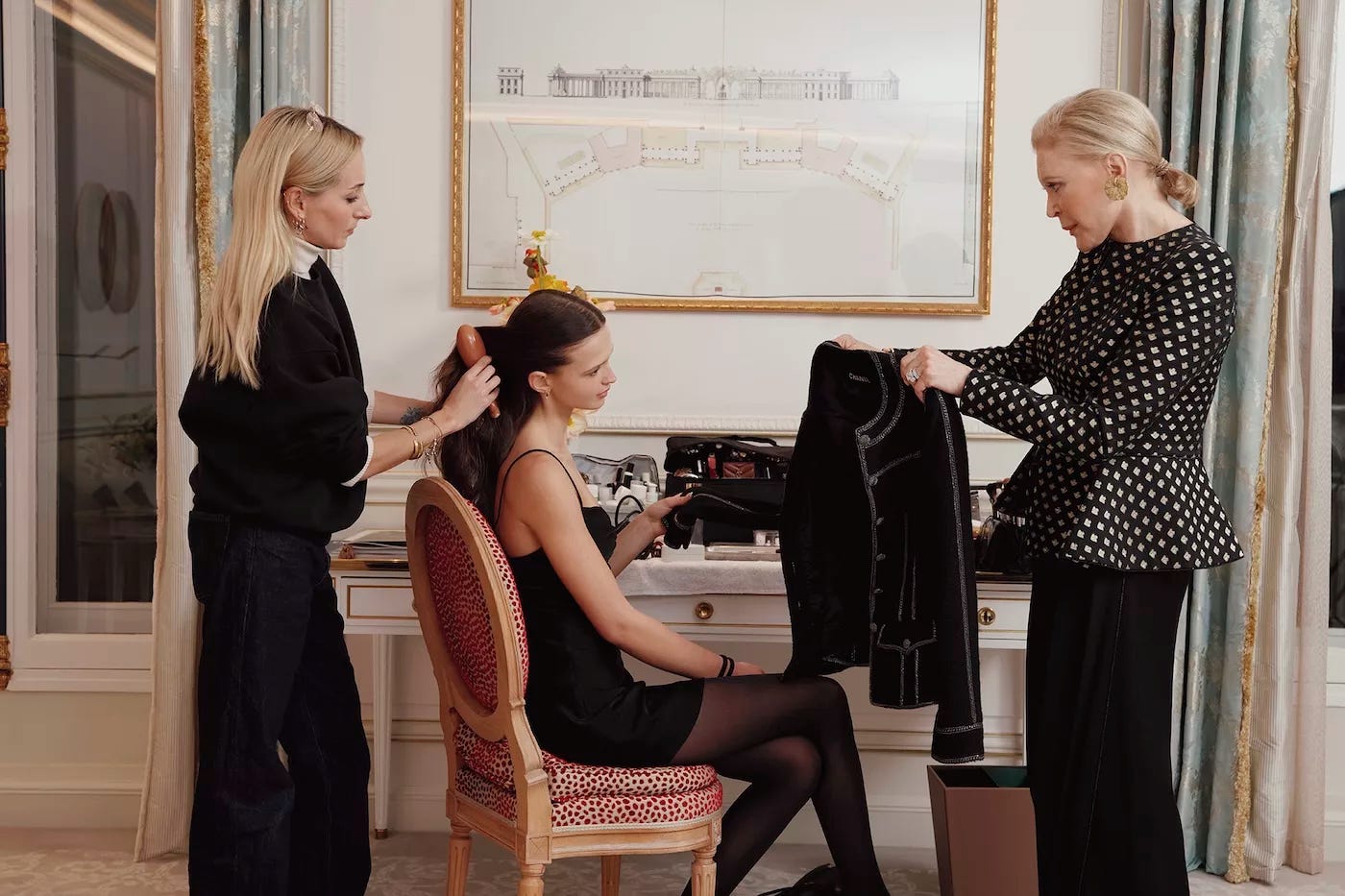
The Grusses arrived on a Sunday and checked into Le Meurice on rue de Rivoli, overlooking the Tuileries Garden. The next morning at 7 a.m., room service delivered breakfast—“That’s my wake-up call,” Audrey quipped—and she set to readying herself for the day. Many couture clients hire hair and makeup teams; Audrey handles that all herself—an expertise she honed as a fashion model while studying biology at Tufts University, and as an Elizabeth Arden marketing executive in the 1980s.
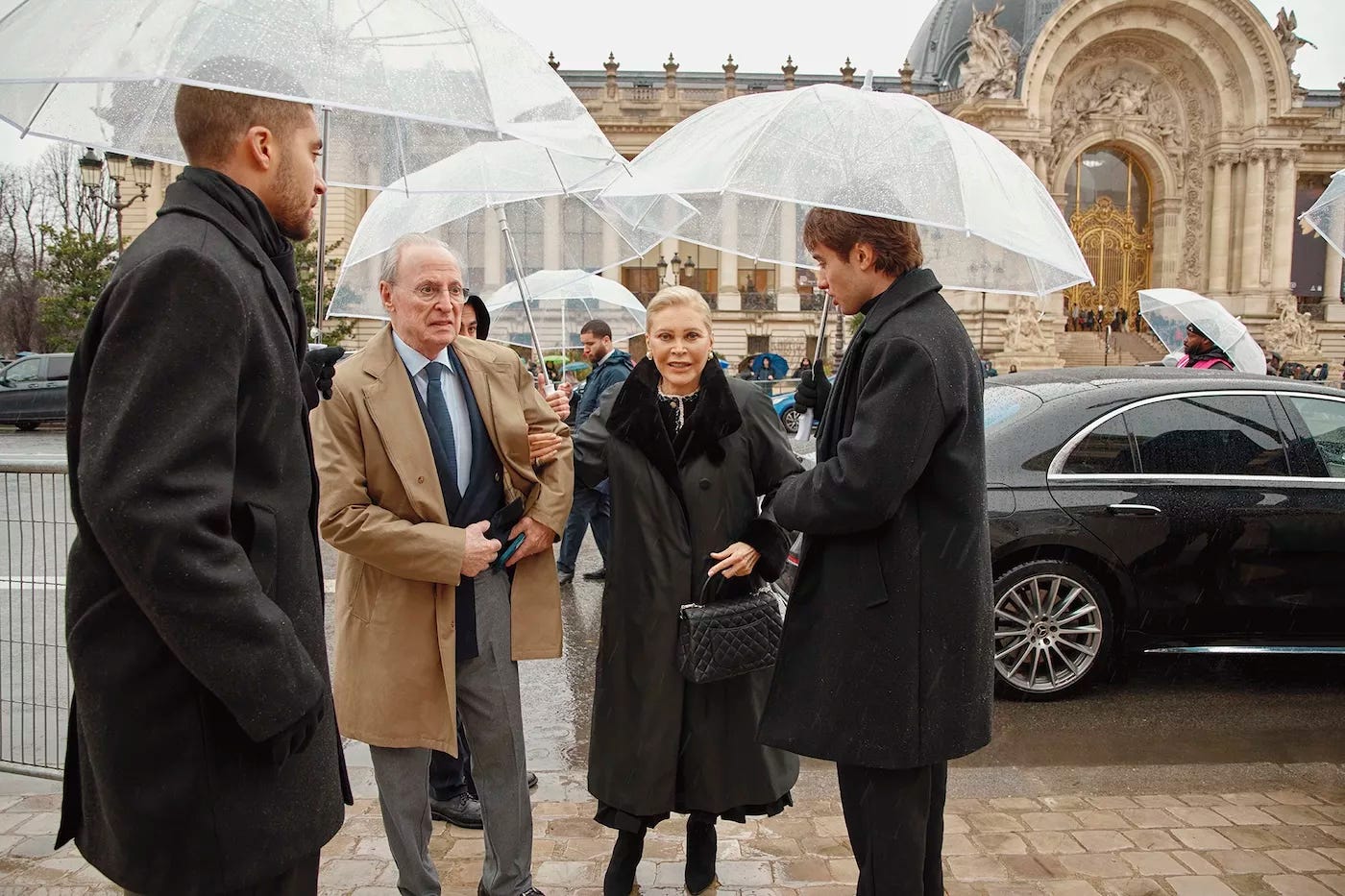
First on the schedule was Schiaparelli at 10 a.m. Normally, Audrey wears something from the brand—“Out of respect for the designer,” she explained. But she didn’t own any Schiaparelli—yet. Instead, she dressed in a black velvet Dior ready-to-wear suit with gold trim, since she was going to the Dior show in the afternoon. She topped it off with an Yves Salomon Blackglama mink coat.
The Schiaparelli show was at the Petit Palais, a Beaux Arts museum next to the Seine. During his seven-year tenure, Texas-born creative director Daniel Roseberry has revitalized the century-old house with his deeply Surrealist designs. This season’s were rooted in an Edenic naturalism with otherworldly creatures—think Michelangelo’s Sistine Chapel fresco meets Alien, two of his inspirations. That translated into a one-shoulder brown tulle column embroidered with an overlay of smoked crystals and hundreds of small shells, which clinked delicately as the model walked by; a ’50s-style black tulle bustier gown covered with crystal-dipped peacock feathers; and a black Chantilly lace evening skirt suit, the bolero sprouting a giant scorpion tail mid-back. “Very artistic and very dramatic,” Audrey said. “Pure fashion.”
Once it had concluded, Audrey swept down the museum’s marble steps to her waiting sedan, and headed back to Le Meurice for a light lunch with Martin. Then it was off to Dior at the Musée Rodin on rue de Varenne. She made her way through a wall of shouting paparazzi, crossed the crowded cobblestone drive, walked through the museum, passing Rodin’s masterpiece “The Kiss” along the way, and down the steps into the garden, where she entered an enormous tent pitched on the lawn. Once inside, Audrey was taken aback by the decor. “So magical, with mirrored walls, shiny floors, and cyclamen blossoms hanging from the ceiling,” she said. They were a reference to the bouquet that former Dior designer John Galliano gave to the house’s new creative director Jonathan Anderson after he landed the job last year. “Dior sent the same flowers in a tiny vase to us at the hotel as a welcome gift,” Audrey said.
She took her seat in the front row, along with French first lady Brigitte Macron, LVMH chairman Bernard Arnault, Jeff and Lauren Sánchez Bezos, Dior brand ambassadors Jennifer Lawrence, Anya Taylor-Joy, eventually Rihanna—she arrived an hour late—and Galliano; it was his first Dior show as a guest, ever.
Anderson sent out 63 looks, many of them with a bulbous silhouette inspired by the vases of Kenya-born British ceramicist Magdalene Odundo. Some looked like seashells enveloping the body, others had feathery overlays, and a few were topped with swishy little knit capes. Audrey noted several, including a sheer daffodil-yellow column with a bubble-like sphere circling the upper bodice. She thought it could be terrific for the 20th anniversary Hope for Depression Research Foundation luncheon next fall. Yellow is the charity’s signature color, because, she explained, it represents joy. “Jonathan is a great talent and will do very well,” she said. “It’s very different from John Galliano. But we are in different times now.”
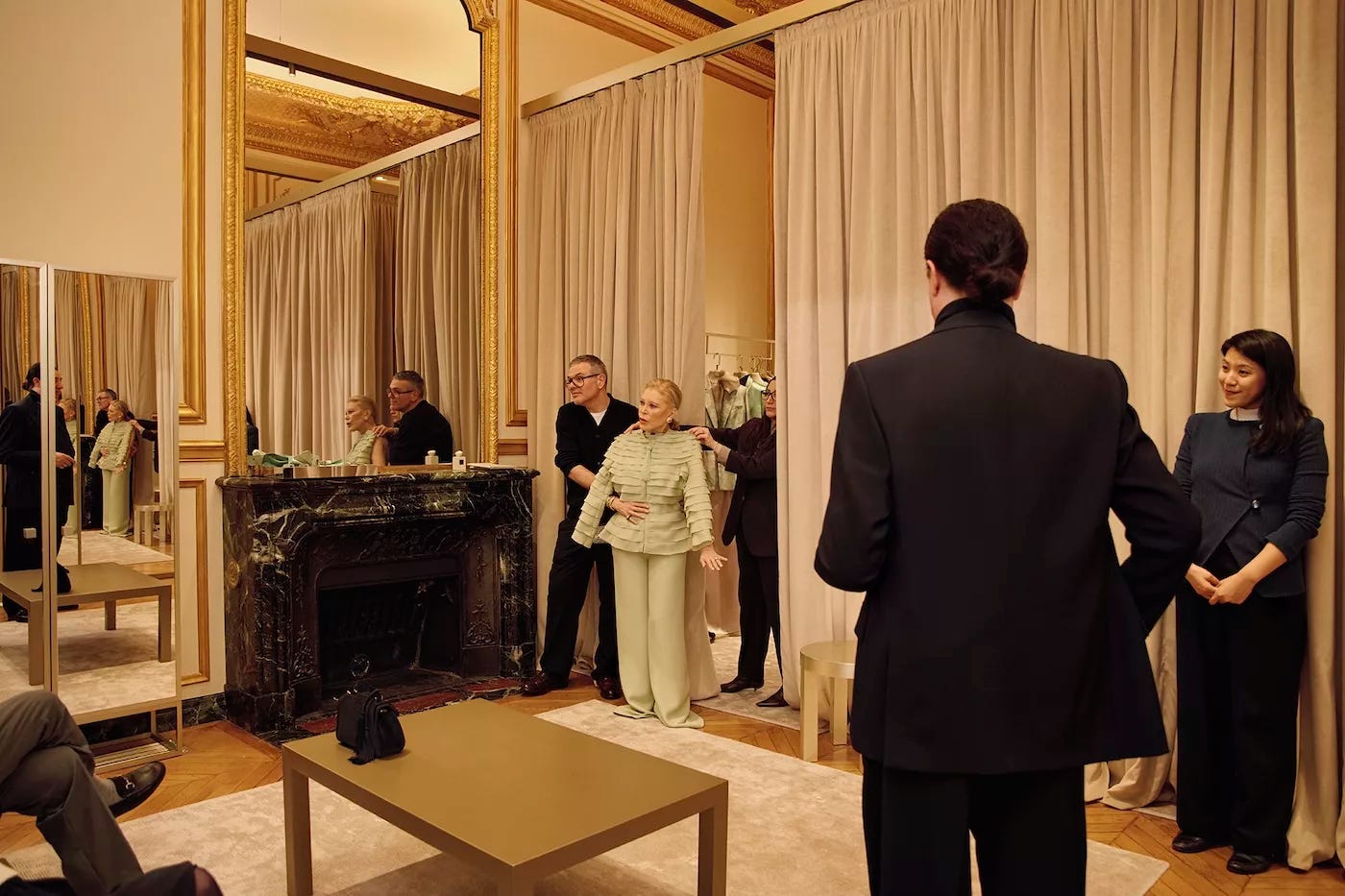
From there, she dashed over to Palazzo Armani, the 19th-century mansion steps off Avenue Montaigne that serves as the Italian brand’s Paris couture house. She needed a final fitting for an outfit she ordered last summer in New York: “A black velvet jacket with a small gold pattern, round neck and peplum, and pants with a sarong front, so it looked like a skirt from the front and pants in the back,” she said. The look was originally shown with pants, but, she said, “we adapted it into this hybrid look. It would be more useful for me than pants alone.”
This is an excerpt from PALMER Vol. 11. To read the full story, click here to purchase the issue.
You can browse The Style Files’ curated shop for beauty, books, decor, film, sustainable fashion, and more here.
To keep up with my work:
Follow me on Instagram
Buy my books:
Listen to my award-winning podcast, The Green Dream, on Apple, Spotify, or wherever you get your podcasts.
The Style Files may earn a small commission if you shop via affiliate links in this newsletter.
Couture always feels luxurious, even when I read about it...
Thank you for the inside peek! 💕